
Morse Code Titanic Distress Signals (Complete Guide)
You must be wondering if Morse code was used on the Titanic, and if so, then what signal was sent initially, SQD or SOS? While the Titanic operators did use Morse code for their distress signals, the first initial message sent was CQD, not SOS. At that time in 1912, CQD was a universal distress call used by Marconi operators. After some time, the wireless operator, Jack Phillips, also began sending the SOS signal.
In this guide, we’ll go through all the possible aspects of the Morse code Titanic so you can know how Morse code played a key role in saving many lives. We not only provided all the essential Titanic Morse code messages but also discussed the new regulations enacted after this tragic incident. So, whether you want to know how the help signals were sent or how nearby ships received them, this guide is your cream of the crop.

Titanic Morse Code Messages
The Titanic was a British luxury passenger liner that sank on 15 April 1912 when it hit an iceberg. Morse code played a key role in saving many passengers in this tragedy. In Titanic, two employed radio operators maintained communications using Morse code, and the primary traffic was personal telegrams via Marconi wireless telegraphy. The short messages were sent to and from the wealthy passengers or business associates to the mainland.
Approximately 250 telegrams were sent during the period between leaving Southampton and the disaster, as Mr Bride stated. When the Titanic hit an iceberg, the captain told the operators, “You had better get assistance,” and sent a signal “CQD MGY” half a dozen times. Where the signal CQ stands for “Attention all Stations”, the letter D indicates danger or distress, while MGY stands for the callsign for the Titanic.
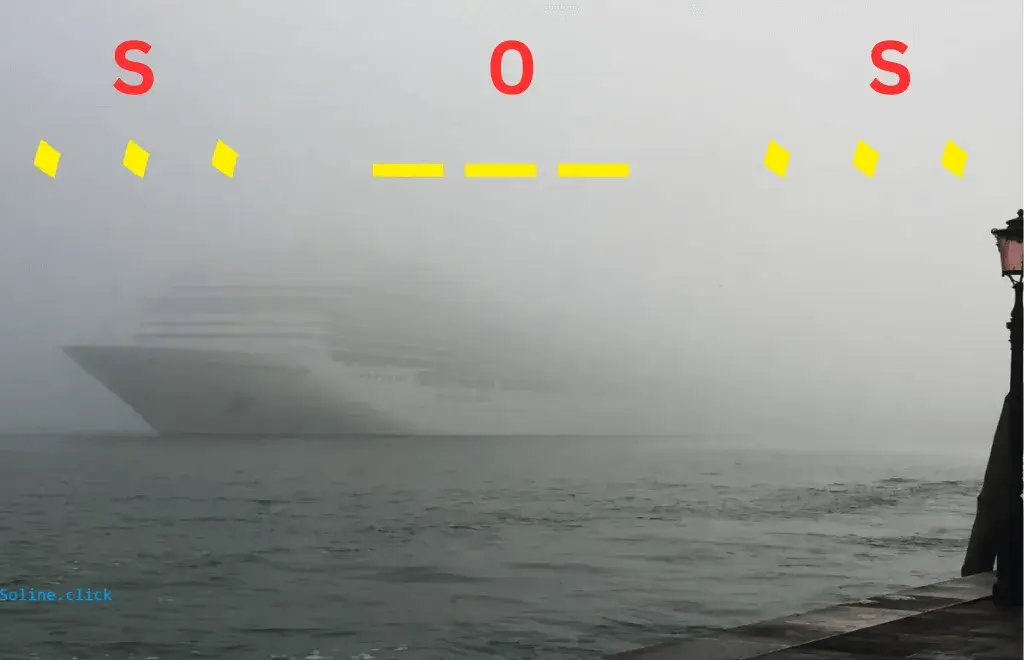
Titanic SOS Message
At the time of the Titanic tragedy in 1912, the primary distress signal was CQD (Come Quick, Danger), which had been used by the Marconi operators since 1904. The CQD was sent initially by the Titanic’s senior wireless operator, Jack Phillips, but later the junior operator, Harold Bride, advised him to try the newer SOS signal. It was the first time the SOS was used in an emergency along with CQD.
The full distress message sent was “CQD CQD CQD DE MGY MGY MGY POSITION 41.46N 50.14W STRUCK ICEBERG“. These messages were read by several ships, including the RMS Carpathia, which rescued 706 survivors.
Other Messages
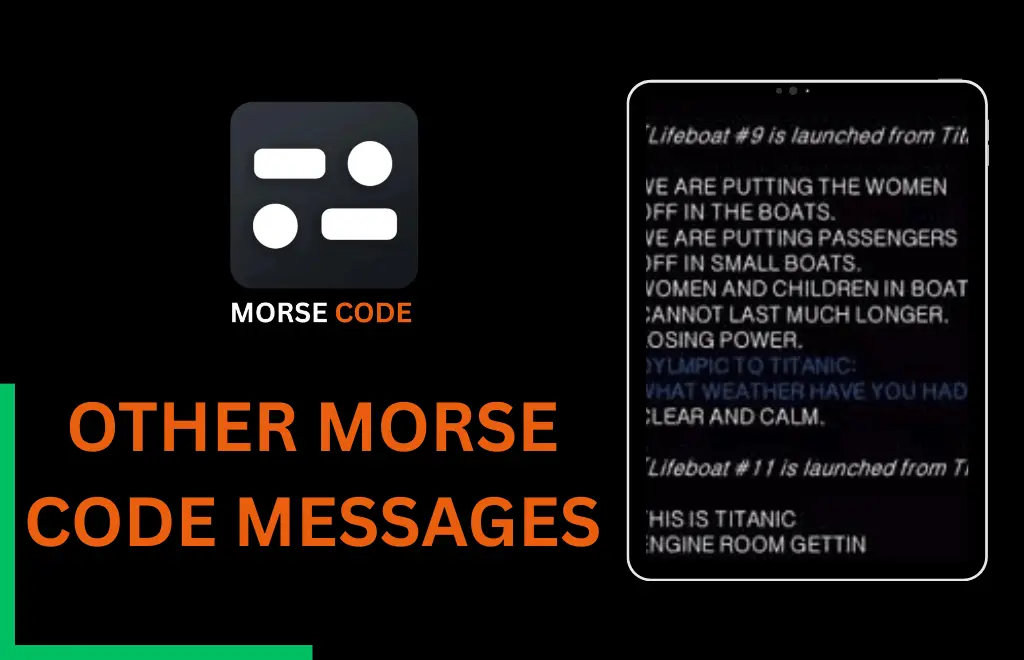
The senior operator sent several additional messages beyond the first distress message. Below are all of them:
- One of the messages was “Come at once. We have struck a berg. It’s a CQD OM. Position 41.46 N 50.14 W“. Here, the OM denotes “old man,” which is a friendly term used by radio operators. The position was the Titanic’s longitude and latitude to help other ships find it.
- Tell your Captain to come to our help. We’re on the ice.
- We’re in collision with a berg. Sinking Head. 41.46 N 50.14 W. Come as soon as possible.
- We’re putting the women off in the boats.
- The engine room is getting flooded.
- Engine-room full up to boilers.
Use of a Morse Lamp
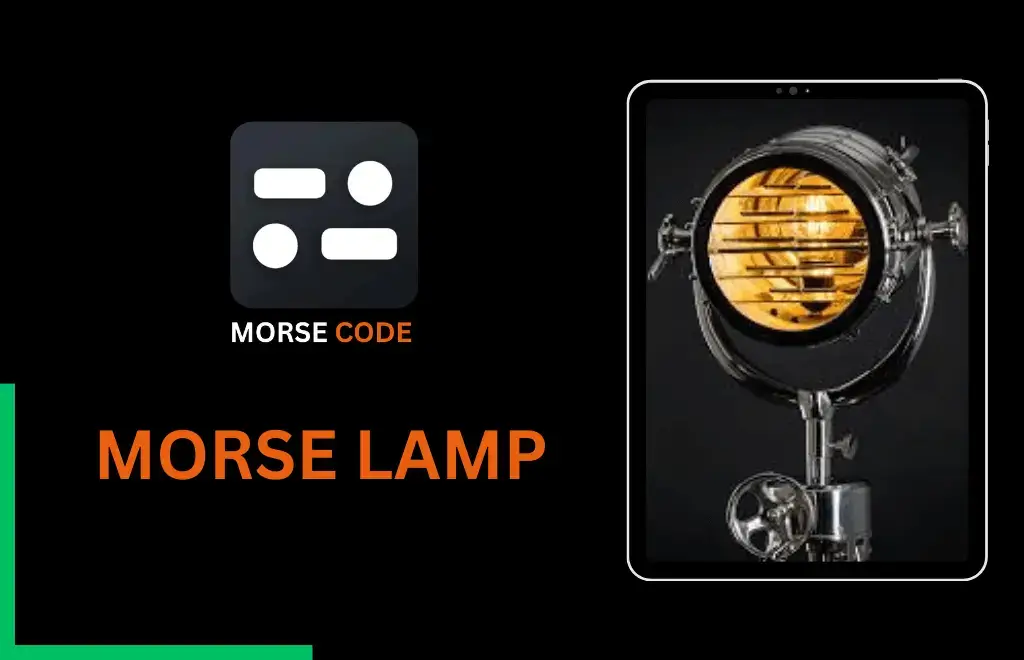
The white flares and Morse lamp were also used by the Titanic’s fourth officer, Mr Boxhall, to signal the other nearby ship as described in the British Wreck Commissioners Enquiry Report. The boat, which was very close to the Titanic, was Californian, but their wireless operator had gone to bed, which is why they couldn’t get the distress signals. However, the white flares were seen by the Californian’s first mate, Herbert Stone, but it did not occur to him that they were a distress signal.
Continental and American Code
The Morse code used by the Marconi operators on the Titanic and other ships involved in the rescue was the continental Morse code, now known as International Morse code or Morse code. In 1912, the previous American Morse code was also used by some American operators. In the enquiry into the Titanic tragedy, Marconi reported that the US Navy ships Chester and Salem worked slowly or seemed unfamiliar with the continental Morse code.
Titanic’s Radio Equipment
The radio equipment installed on the Titanic was from the Marconi company in the Marconi room. In the British Wreck Commissioner’s Enquiry, Marconi explained that the radio equipment on the Titanic had been installed for the first time on a large liner in 1900 and that the equipment on the Titanic was what we call a 5-kilowatt installation; it was of a very modern type and guaranteed, I think, for a distance of about 350 miles.

How Morse Code Could Have Saved More Lives
The following possible factors could have been made to save more lives:
- The Californian ignored the calls: The SS Californian, the closest to the Titanic at about 10 miles, had turned off its wireless station for the night. If they had received the signal, more lives might have been saved.
- Non-emergency Messages from others: The Titanic’s wireless operators spent much of their day relaying private messages from wealthy passengers, creating a backlog of critical communications.
- Delay in rescue: Although the RMS Carpathia was en route to the Titanic for rescue, it took them over 4 hours to arrive due to the icy waters.
Changes Following the Disaster
The second radiotelegraph convention was held in London in 1912, following the Titanic disaster, which had exposed significant flaws in maritime communication. Several new regulations were made, and the most important of these are given below:
- Most coastal stations and ships were required to have a 24-hour radio watch.
- Ships had to maintain radio silence for the first 10 minutes of each hour to listen to distress signals.
- Some ships had to keep radio equipment that could operate for at least 6 hours on its own battery.
- After the Titanic tragedy, the SOS became the universal distress signal, replacing CQD.
- The Titanic’s wireless signal had a limited range. The future ships were equipped with more powerful transmitters.
The Relevance of Morse Code Titanic Messages Today
The Titanic disaster underscores the importance of Morse code, making it a backup communication method across many applications. Here are some of them:
- Maritime Navigation: Although modern ships now use satellite and digital communication, some ships still use Morse code beacons.
- Emergency Situations: Learning basic Morse code is essential for pilots and military personnel for emergencies.
- Historical Preservation: Museum and Titanic lovers preserve the history of the Morse code Titanic messages.

Learning from the Titanic’s Wireless Operators
Although Jack Phillips and Harold Bride were highly experienced wireless operators, their experience highlights some key lessons for modern disaster communication:
- Redundancy: If several other ships had turned on their radios, more lives could have been saved.
- Message priority: The emergency message must always take priority over any other non-emergency messages.
- Training: Both operators’ knowledge of Morse code helped them convey the message despite the chaos.
How Morse Code Titanic Signals Are Remembered Today
The Morse code Titanic messages are remembered in many ways:
- Museum Exhibits: You can see the artifacts and Morse code equipment used during the disaster in the Titanic Museum and the Marconi Museum.
- Re-enactments: Some amateur radio enthusiasts annually transmit Morse code messages in memory of the Titanic operators.
- Hollywood Films: Many films and movies have been made about the Titanic, including scenes of the operators sending SOS signals.
FAQs
Conclusion
As we reach the end of the article, I can confidently say that now you’re well-equipped with everything you need to know about the Morse code Titanic. Morse code played a key role in saving many lives on the Titanic. The Titanic operators used both CQD and SOS distress signals for help, and the first signal sent was “CQD MGY”. Where CQ stands for Attention all stations, D denotes danger, while the MGY is the callsign for the Titanic.
