
How to Learn Morse Code (Explained)
Do you think Morse code is hard to learn? Not really! Once you understand the basics of Morse code signals and the alphabet, consistent practice makes it much easier to master. I get how it feels when you’re picking up a new and unique skill to impress your friends, but those confusing dots and dashes of Morse code make you feel overwhelmed at first, which leaves you unsure where to start and how to practice consistently.
No worries, as you’ve arrived at the right article. In this article, we’ve gone through all the nitty-gritty of Morse code learning so that you can master it efficiently. We not only guided you on how to learn Morse code, but also cleared a lot of misconceptions to make the process easier and less intimidating. Whether you’re a beginner or a professional, this guide is sure to make you succeed.
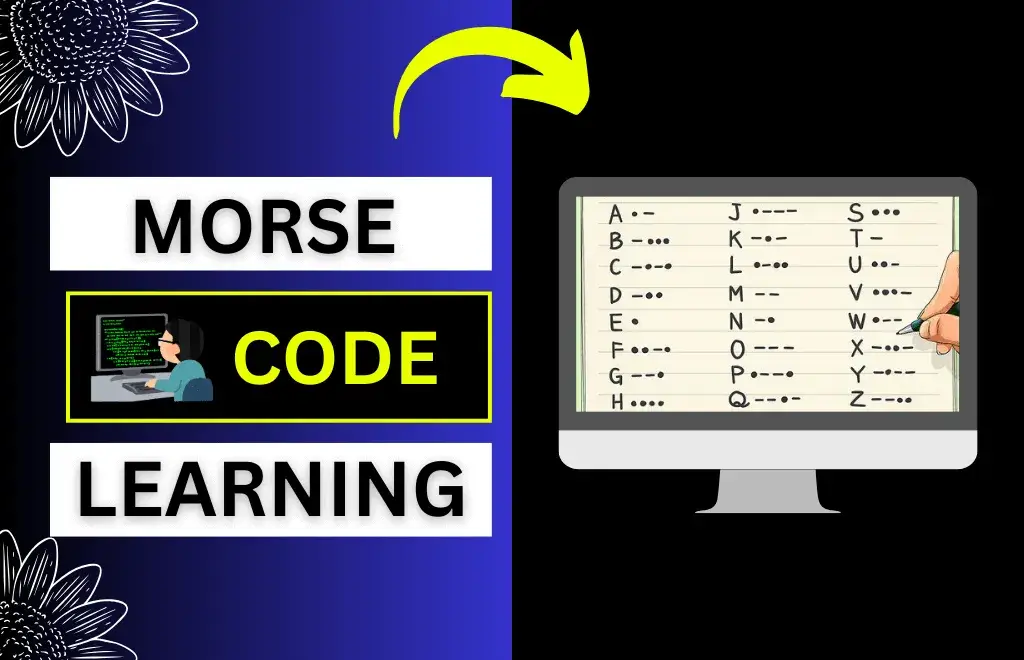
How to Learn Morse Code for Beginners Easily
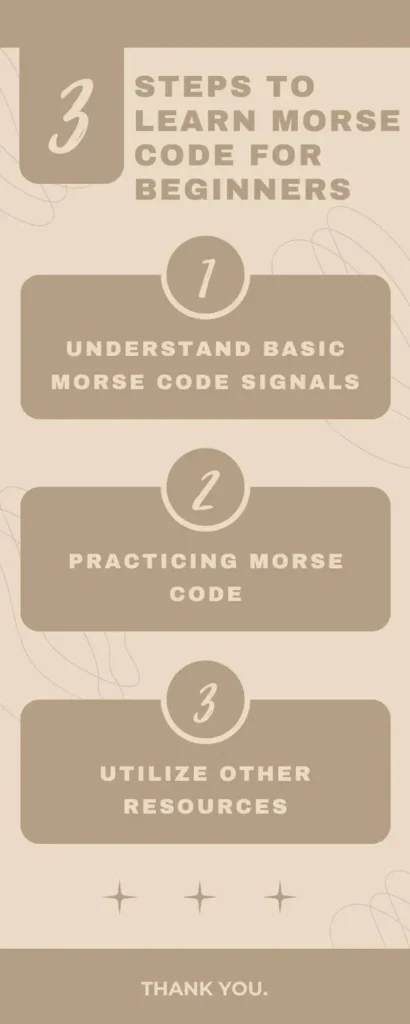
Learning the international Morse code isn’t complex or challenging; it just requires some dedication and study. First of all, you’ll have to get familiar with the dots and dashes of Morse code signals, also known as dits and dahs. Once you know the meaning of each alphabet and number, you can easily write and translate messages on your own. Follow the information below to learn the international Morse code effectively.
Understand Basic Morse Code Signals & Alphabets
Start by understanding the basic Morse code signals and alphabet. Here’s what you need to do for this:
How to learn Morse Code signals:
Morse code works by combining two different signals, dots and dashes, to represent each letter and word. You’ll need to learn these signals to recognize them. Dots are also known as “Dits”, pronounced with a short i sound and a silent t, while the dashes are also known as “Dahs”, which is pronounced with a short a sound. Dots appear as a simple period, while dashes appear as a horizontal line similar to hyphens. These two different signals can represent every letter in the English language.
Explore the Morse code alphabet:
Start reading the Morse code alphabet, which you can use as a reference in learning and interpreting the code. While exploring, make notes of each character and then speak its corresponding code loudly. In this way, you’ll be familiar with bits of code by their sound and appearance in a very short time. Keep in mind, there are two Morse codes: International and American, and both of them contain slight variations in their alphabets.

Speak each signal:
Speaking is the fastest way to learn Morse code, as compared to seeing, as it doesn’t require counting up the signals. Practice saying each dot and dash loudly in correct rhythm. Dits make a short sound, while dahs are more pulled out and must be pronounced approximately three times longer than dits.
Make sure to keep a fair spacing between each character, as it’ll help in understanding the code more efficiently. Letters are separated by a space equal to three dots, while the words are separated by a space equal to seven dots.
Create smart word connections:
Word association is an effective technique for kids and beginners to keep track of letters and numbers in Morse code. For example, you can consider the letter C with “catastrophic,” as it begins with the C and contains the same syllables, along with the same syllable emphasis. Make your own word connections that help link the sequences of signals with their related sounds naturally in your mind. Write down these hints and then study them while reading each letter out loud.
Start putting together basic letters and words:
Once you’ve understood Morse code signals, start making basic letters and words. Begin by forming simple letters that are represented by a single dot and a dash. The single dit represents the letter E, while the single dah represents the letter T. Then move to two dits “I” and two dahs “M”, and gradually increase. Master the knowledge of simple characters first and then move to complex sequences. Furthermore, learn the sequence of the SOS ( • • • – – – • • • ) distress signal along with CQD (“-•-• –•- -••”) as they can help you in an emergency and save your life.
Practicing Morse Code
Once you understand the basic Morse code signals and alphabet, start practicing the code by following the information below.
Listen to Morse code recordings:
Numerous recordings are available in the archives of the American Radio Relay League for learning Morse code, which can be used as guidance on how communication works in this system. Keep attention on every pause between characters or characters themselves. If possible, reduce the playback of the sound to make it easier to read and understand each character.
Copy children’s books or worksheets:
Children’s books can be a very effective method for practicing Morse code, as the whole book contains simple sentences that can be translated into their corresponding code easily. Simply explore the book’s pages one by one and start converting the significant sentences into Morse code. It’s a valuable strategy that can also help in meeting speed goals.
Write to yourself in Morse code:
When you’re done studying, write down some essential words and phrases. Scramble them and then try to translate them at the start of the next session. It’ll help the characters stick in your memory, and make sure to keep the vocabulary simple to ensure the message is easy to read and write.
How to learn Morse code from a friend:
If you’ve a friend who is also learning Morse code, then you can work with them to improve your skill by sending secret messages in dots and dashes instead of ordinary language. From sharing ideas, playing games, telling jokes, and much more, this strategy not only makes things fun but also keeps you motivated.
Utilize Other Resources
There are a variety of the best resources available for learning and practicing Morse code for beginners. Here are all of them.
Use our Morse Code Translator:
You can use our advanced online Morse code translator that not only converts the text into Morse code but also decodes Morse code into readable text. The tool is straightforward to use and contains various helpful features, including Sound, Vibration, and Flash. It’s the best trainer and the most effective method of learning and practicing Morse code.
Download a Morse code training app for Android:
There are various applications available for learning Morse code, such as Morse-It and Dah Dit. These apps include audio recording and visual recognition, making your learning experience more seamless. They also encourage the traditional Morse code tapping by providing a push button that you can use to interact directly through your device’s haptic touch response. You can use these apps at home or anywhere in your free time.
Attend a Morse Code class:
You can also join a Morse code class, as many radio operators offer Morse code courses that contain helpful tips and valuable insights. These courses are available for anyone, whether you’re into ham radio or not. It’s an excellent strategy to get structured lesson plans and one-on-one instruction from highly skilled teachers to improve your ability to learn Morse code.
Invest in an audio learning course:
You can also use a set of guided practice tapes if you don’t find any classes in your area. Listen to these recordings carefully at your own speed and complete the included activities or exercises. You can use our Morse code audio decoder tool for this purpose.
How to Learn Morse Code with Eyes?
You can learn Morse code with your eyes using a visual chart to connect dots (short) and dashes (long) patterns with letters and numbers. Keep in mind that you don’t have to rely on actual eye movement, just focus on memorizing these visual sequences instead.
FAQs
Conclusion
As we reach the end of the article, I can confidently say that you’re now well-equipped with everything you need to know about how to learn Morse code effectively for beginners and kids. While learning this language can be complicated and difficult, with consistent effort and practice, anyone can easily master it. To become a Morse pro, first understand the basics of the Morse alphabet and signals, and then practice them continuously to ensure better retention, faster recognition, and long-term fluency.
