
Morse Code Timing (Complete Guide)
I completely understand how it feels when you’re trying to decode a Morse code message, but because of the inconsistent timing of dots and dashes, you not only make the signals uneven but also end up with an unreadable message. Timing is very crucial in Morse code, and if the duration of your dots, dashes, and pauses isn’t correct, even a simple message can turn into a confusing jumble of signals.
No need to worry, as you’re on the right article. In this article, we’ve explored all the possible aspects of Morse code timing so you can decode or send the messages smoothly and accurately. From telling you the basic timing rules to providing an overview of the Wordsworth and Farnsworth methods, this guide has got your back. Doesn’t matter whether you’re a beginner or an experienced operator; this guide is your cream of the crop.
Basic Morse Code Timing Rules
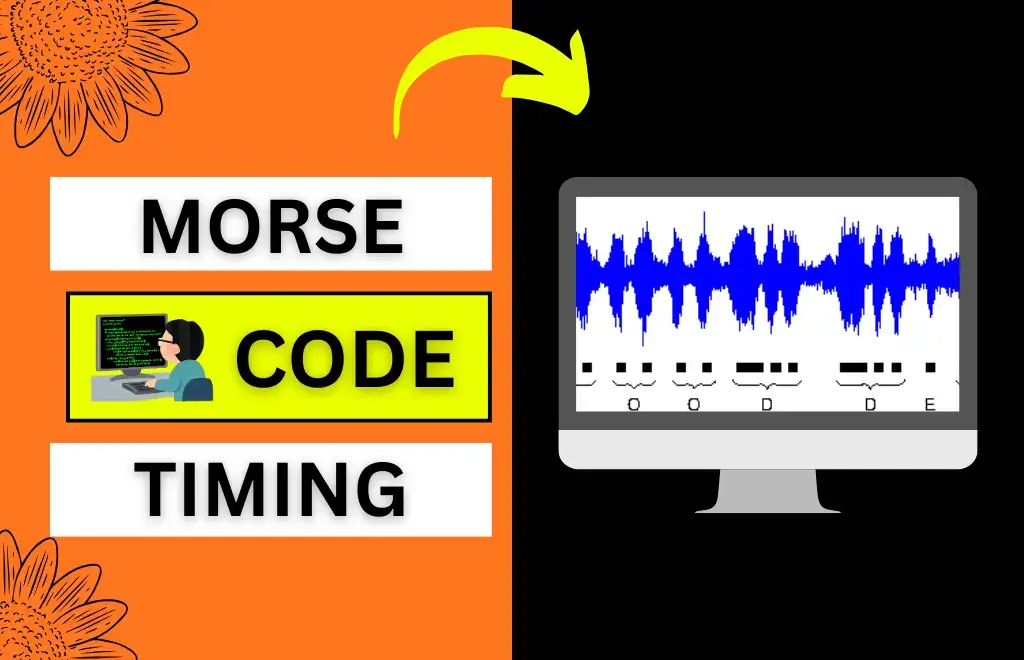
The timing of Morse code is based on the length of one dit or dot. If we know the dit length, we can also determine the length of a dash. Below are the five basic rules that help people identify the dots from dashes in Morse code:
- The length of a dot or dit is 1 unit.
- The length of a dash or dah is three units.
- The gap between the dots and dashes of Morse code within a single character is 1 unit.
- The space between the characters of a word is three units.
- The gap between words is seven units.

Words Per Minute
The Morse code speed is measured in the number of words per minute. It’s a tricky concept: you can send more short words per minute than long ones. For example, if we consider the word “PARIS” as a reference, and if Morse code is transmitted at 20 words per minute or 20 WPM, then the word “PARIS” or (“PARIS ” with a space on the end) will be sent 20 times in a single minute. The word PARIS is 50 units long, and it translates to “.–. .- .-. .. …/”.
- The above Morse code translation contains 10 dots, which equals 10 units.
- The above Morse code translation contains four dahs, which equals 12 units.
- The above translation contains nine intra-character spaces, totaling nine units.
- The translation includes four inter-character spaces, totaling 12 units.
- The space between words is seven units.
Morse Code Wordsworth Timing
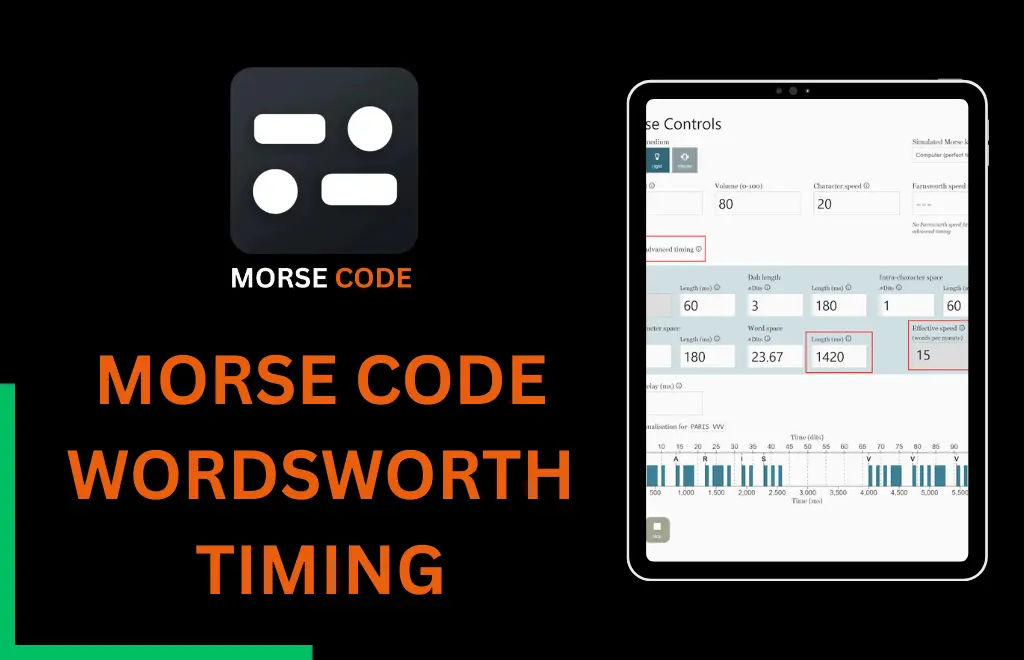
The Morse code Wordsworth timing is a method that makes the message easier to understand by enhancing the word recognition of Morse code. In this method, the gaps between words are stretched, while the gaps between characters remain unchanged. It’s used by advanced learners who can achieve instant character recognition but have difficulty in recognising and processing each word.
Morse Code Farnsworth Timing
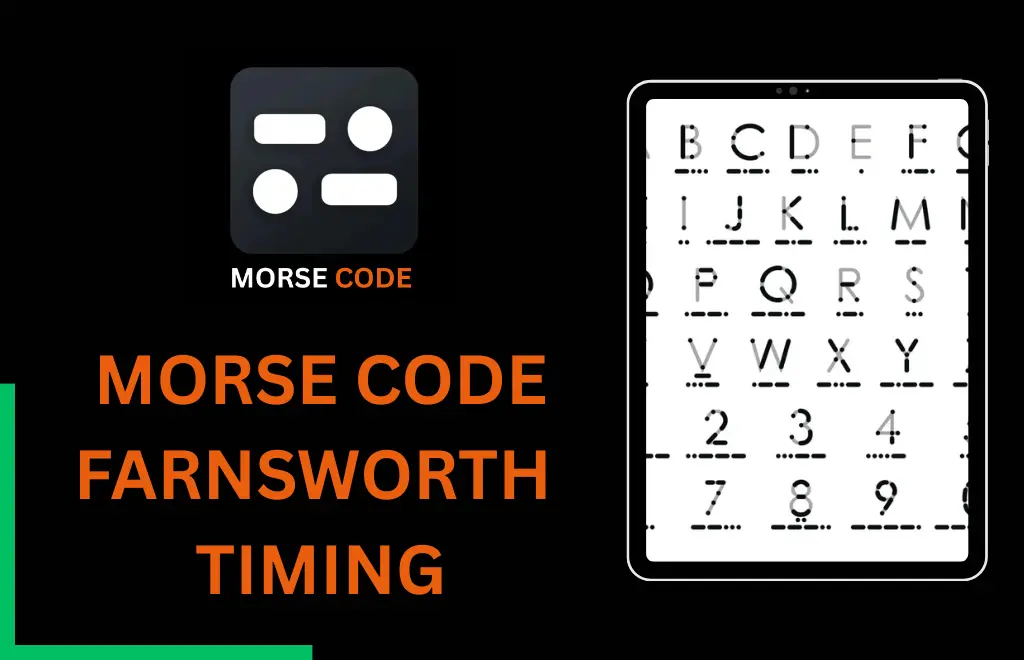
The Morse code Farnsworth timing is a method in which the speed of sending a character is increased by adding an extra time between characters and words, so that each character is heard as a whole sound. It helps with instant character recognition by providing more time for recognition and is named after Donald R. “Russ” Farnsworth.
FAQs
Conclusion
As we reach the end of the article, I can confidently say that now you’re well-equipped with everything you need to know about Morse code timing. The timing of Morse code is measured in words per minute and is based on the relative duration of dots, dashes, and spaces. The length of a dot is one unit, while that of a dash is as long as three units. The intra-character space between the dots and dash symbols is one unit, while that of the inter-character space is three units. The gap between the two words is approximately seven units.
